Planning a Cruise When Seasickness Is a Concern
Cruise seasickness preparation starts with choosing a steadier cabin, planning prevention steps, and knowing how to respond to symptoms. At CruiseTourPhoenix.info, we help travelers match cruise details and cabin choices to their motion-sensitivity concerns.
Written by Wendy Denny
Request an EstimateWhat Seasickness Feels Like on a Cruise?
Seasickness is a form of motion sickness that can cause nausea and other body symptoms when the inner ear and eyes sense movement differently.
Seasickness can begin with mild discomfort and become stronger when ship movement continues. Symptoms vary between travelers, so notice how your body responds early.
These symptoms can affect your enjoyment, appetite, and rest. Planning a response before sailing can make the situation easier to manage.
Why Cruise Ships Can Trigger Motion Sickness
Cruise ship motion can trigger seasickness when waves and ship movement conflict with signals from the eyes and inner ear.
Ship movement can feel stronger when the vessel travels through rough seas. Your inner ear senses rolling or rising, while your eyes may see a stable cabin.
A cruise itinerary also shapes motion exposure. Routes with longer open-water stretches may feel different from itineraries with frequent port stops.
Which Cruise Cabin Location Is Better for Seasickness?
A cabin near the ship's center and lower in the vessel usually offers steadier motion than a forward, aft, or high-deck cabin.
The best cabin for seasickness is often a cabin near the ship center on a lower deck. These locations can reduce the feeling of movement because they sit closer to the vessel's center of motion.
Forward cabins may feel more pitch during waves. Aft cabins can respond differently as the ship moves, while upper decks may feel more sway.
An inside cabin can limit visual motion cues, but some travelers prefer a window or balcony for daylight and fresh air. Personal comfort, access needs, and the deck plan should guide the final choice.
Cabin Features Worth Discussing Before Booking
Cabin features can affect comfort, movement awareness, and access to helpful areas onboard. We review these details with your motion concerns before recommending a cabin category.
| Cabin detail | Why it matters |
|---|---|
| Cabin category | Different categories offer different locations, layouts, and views. |
| Deck plan | The plan shows whether the cabin sits near the ship center, lower decks, elevators, or busy areas. |
| Window view or balcony | A view may help some travelers orient themselves and access open air. |
| Elevator access | Nearby elevators can reduce walking when symptoms make movement difficult. |
| Dining and medical access | Nearby dining areas and the medical center can simplify meals and onboard care. |
Cabin placement can't remove all motion. It can support a more comfortable plan when combined with prevention steps and symptom monitoring.
How to Prepare for Seasickness Before Embarkation
Cruise seasickness preparation works best when you plan medication questions, cabin preferences, food choices, and symptom responses before departure.
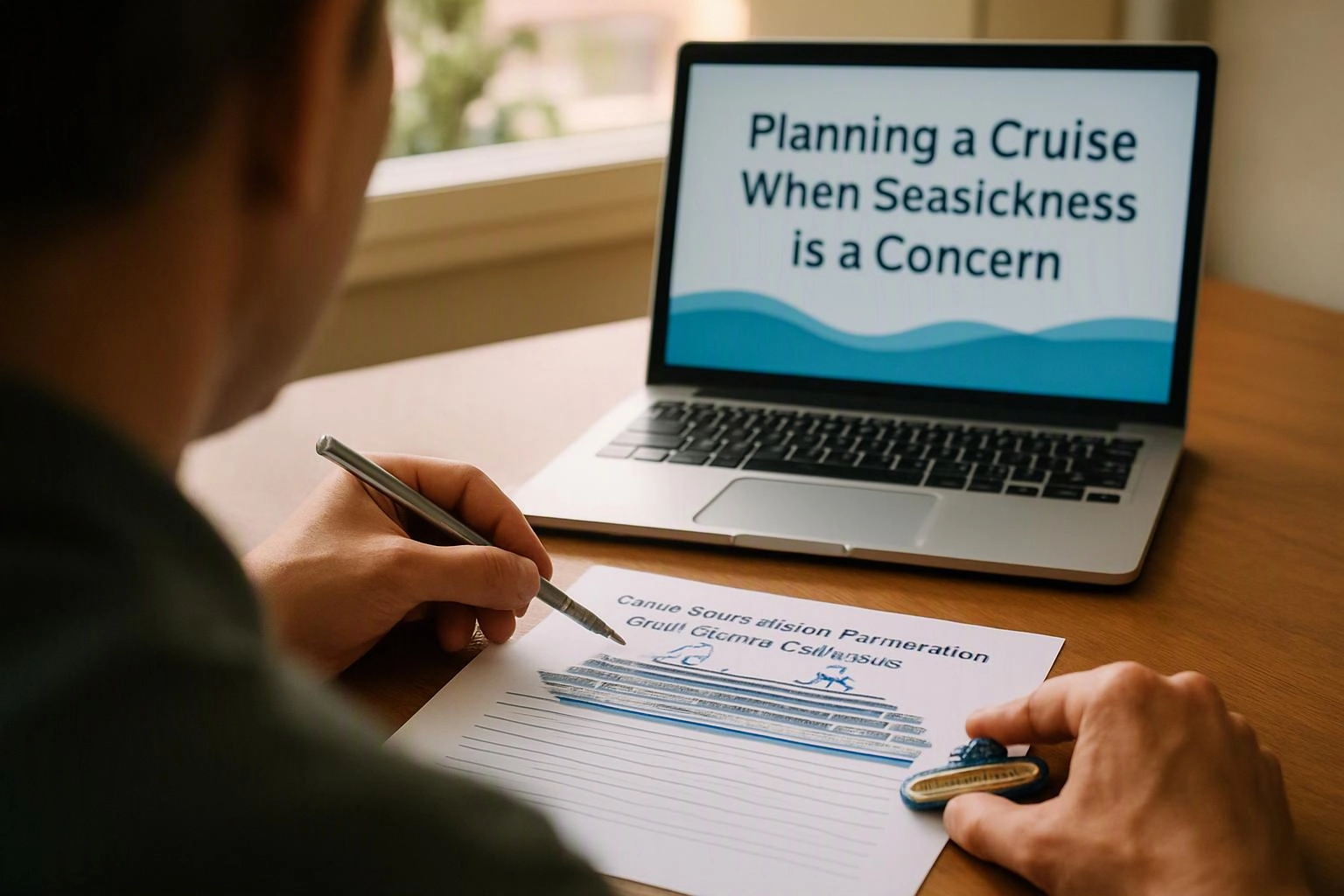
Preparation also includes deciding what you'll do if symptoms begin. A simple plan helps you act before nausea or dizziness becomes severe.
Prevention Steps to Use During the Cruise
Seasickness prevention during a cruise focuses on steady visual references, fresh air, hydration, rest, and food choices that feel manageable.
Comfort can change as the ship moves through different conditions. Stay flexible and use the approach that feels safest for your body.
What to Do If Seasickness Starts Onboard
If seasickness starts onboard, move to a comfortable area, use your planned remedies safely, and contact the ship's medical team when symptoms need attention.
Fresh air and a horizon view may help some travelers. Rest in a stable, comfortable position and sip water if you can keep fluids down.
Follow medication directions and avoid taking extra doses without medical advice. The ship medical team can provide onboard care and help assess worsening symptoms.
Monitor vomiting, dizziness, weakness, and hydration. Ask for help if symptoms are severe, continue, or prevent you from drinking fluids.
How Cruise Choices Affect Seasickness Concerns
Cruise type and itinerary affect motion exposure, so travelers with seasickness concerns should compare the sailing environment before booking.
An ocean cruise may include open water and changing sea conditions. A river cruise follows a river current, but ship movement can still affect sensitive travelers.
| Cruise choice | Motion factors to review | Planning focus |
|---|---|---|
| Ocean cruise | Open water, waves, rough seas, and changing sea conditions | Review the ship center, lower decks, itinerary, and sea days. |
| River cruise | River current, turns, docking activity, and ship movement | Review the vessel layout, cabin position, and port schedule. |
| Ship size | The vessel's layout and response to waves can shape comfort. | Compare deck plans and cabin locations for the specific sailing. |
| Port schedule | Frequent stops can change the time spent in open water. | Review the full cruise itinerary and planned sea conditions. |
Our team compares these factors with your motion concerns and travel preferences. That review can help narrow the choices before you select a sailing.
How We Plan a Cruise Around Seasickness Concerns
CruiseTourPhoenix.info reviews your motion concerns, cruise type, itinerary, and cabin preferences before presenting suitable planning options.
We compare ocean cruise and river cruise settings, then review ship movement, port schedules, and possible rough-water exposure. We also use the deck plan to discuss cabin location, access, and comfort priorities.
Our team can support cruise agency planning with a practical motion-sickness plan. We connect your prevention choices with the sailing details, so you can make a clear booking decision.
Wendy Denny provides the author attribution for this guide. Contact our team to discuss your cruise preferences and request planning assistance.
Contact our cruise planning team
Get a Free EstimateQuestions About Cruise Seasickness Planning
Can you get seasick on a river cruise?
Yes, a river cruise can still cause motion sickness, although the sailing environment differs from an ocean cruise. River current, turns, docking activity, and vessel movement can affect sensitive travelers.
Should I talk to a doctor before taking seasickness medicine?
Yes, talk to a doctor or pharmacist before taking motion sickness medication if you use other medicines or have health concerns. Medical advice can help you review interactions, directions, and safe use.
Does a balcony cabin help with seasickness?
A balcony cabin can help some travelers access fresh air and see the horizon, but a balcony doesn't guarantee relief. Cabin position, ship movement, weather, and personal comfort all matter.
What should I pack if I am worried about seasickness on a cruise?
Pack any motion sickness medication approved for you, water, comfortable clothing, and easy-to-eat snacks. Keep travel documents and medication instructions accessible during travel.
Related Resources
Cruise Travel Agent vs. Booking Direct: Which Is Right for Your Trip?
Compared ToIndependent Cruise Agent vs. Large Agency: What to Compare Before Booking
Compared ToRiver Cruise vs. Ocean Cruise: Compare the Trip Before You Book
Compared ToCruise Agent Fees vs. Booking Direct: Compare the Full Cost and Service